
What is EV fleet management?

Electric vehicle fleet management is the process of overseeing a fleet of electric vehicles so that it runs safely, efficiently, and cost-effectively. Alongside the usual demands of fleet management, it involves monitoring battery health, optimising charging at the depot and in public, and planning routes around each vehicle's remaining range. Done well, it minimises downtime and maximises the return on your investment in electric vehicles.

A good electric vehicle fleet management system brings all of this into a single platform, so you can see the state of your EVs at a glance and make decisions based on real data rather than guesswork.

IMAGES FOR WEBSITE (600 × 400px) (4)

THE NEEDS of EV fleet management: 

  • Knowing which vehicles are ready to electrify
  • Keeping EVs charged, available, and on the road
  • Controlling cost and emissions as you transition

Why transition your fleet to electric?

For many Australian businesses, moving to electric is no longer a question of if, but when. Tightening emissions expectations, sustainability commitments, and the running-cost advantages of electric vehicles are all pushing fleets in the same direction. Making the switch brings several clear benefits:

  • Lower running costs. Electricity is generally cheaper per kilometre than petrol or diesel, particularly when charging at the depot on an off-peak tariff, and so a well-run electric fleet significantly reduces fuel spend by up to 79%.
  • Reduced emissions and stronger ESG. Switching to electric cuts tailpipe CO2 to zero, supporting your carbon reduction and sustainability goals and making your operation more sustainable.
  • Ideal for last-mile and urban work. The predictable routes and lower daily distances of urban and last-mile delivery suit the range of today's electric vans especially well.
  • Future-ready operations. Starting the transition now helps you plan at your own pace, spread the investment, and stay ahead of tightening emissions expectations rather than reacting to them.

The challenge is knowing where to start, which is where a structured approach and the right data make all the difference.

The benefits of managing your EV fleet with us

  • See which vehicles are ready to electrify based on your real journey data
  • Avoid range anxiety with live battery and range visibility
  • Keep vehicles available by managing charging around your operation

How our EV transition tool helps you
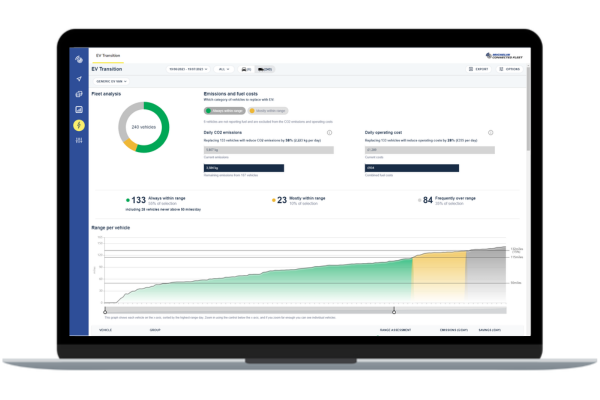
MICHELIN Connected Fleet - EV transition

1

Identify which vehicles can be replaced by EVs using your existing journey and usage data

2

Model the impact of switching, on cost, range, and emissions, before you commit

1 (2)

Plan your transition vehicle by vehicle, at a pace that suits your operation

How our EV INSIGHTS Help You
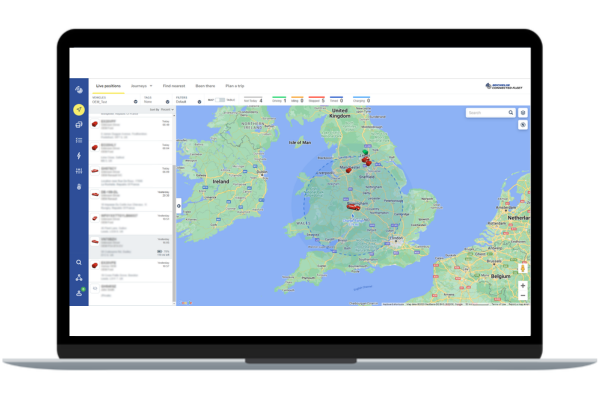
MICHELIN Connected Fleet - EV insights

1

Monitor battery levels and range across every EV in the fleet

2

See charging status and view nearby charge points with availability

1 (2)

Set alerts that remind drivers to charge at the right time

4

Track battery health across the life of each vehicle

How to run an efficient EV fleet

Once your EVs are on the road, a few good habits make a real difference to range, battery life, and running costs. Here are six practical ways to get the most from an electric fleet:

  • Encourage smooth driving. Harsh acceleration and braking drain the battery quickly. Smooth, steady driving and gentle use of regenerative braking extend range, and simply driving 16 km/h slower than usual uses around 15% less energy, according to the Department of Energy. Coaching drivers in eco-driving techniques pays off across the fleet.

  • Plan energy-efficient routes. Thoughtful route planning reduces unnecessary distance and avoids the stop-start of congestion, both of which help preserve range and get more from every charge.

  • Look after the battery. For everyday use, keeping the state of charge roughly between 10% and 80%, rather than routinely charging to 100%, helps protect long-term battery health. Avoid leaving vehicles at very high or very low charge for long periods.

  • Turn off what you do not need. Heating, air conditioning, and other ancillary systems draw meaningful energy. Pre-conditioning the cabin while the vehicle is still plugged in, rather than on the move, preserves driving range.

  • Keep up with maintenance. EVs have fewer moving parts, but regular maintenance, including correct tyre pressures, still matters for efficiency and safety.

  • Use your fleet data. Monitoring how each EV is driven, charged, and used lets you spot inefficiencies and target improvements, which is exactly what a connected EV fleet management platform is for.

Manage your EV transition with MICHELIN Connected Fleet

Whether you are planning your first electric vehicles or optimising a fleet that is already part-electric, we help you make the transition with confidence. Using your own journey data, we show you which vehicles are ready to switch, help you manage charging and range day to day, and bring your whole fleet into one connected platform, backed by a consultative service focused on cutting cost and emissions across transport and logistics and field service operations.

To see how we can support your move to electric, make an enquiry with our team today.

EV fleet management FAQs

What are the benefits of an electric vehicle fleet management system?

+

An electric vehicle fleet management system brings battery levels, charging status, range, and vehicle usage into one platform. That visibility helps you avoid range anxiety, keep vehicles available, reduce running costs, and support your emissions and sustainability goals, all from a single view rather than several disconnected tools.

How do you transition a fleet to electric?

+

A successful transition starts with your data: understanding which vehicles can be replaced by EVs based on how they are actually used, then planning the switch vehicle by vehicle around cost, range, and charging. MICHELIN Connected Fleet's EV transition tool supports this process from planning through to day-to-day management.

How can you make an electric fleet more efficient?

+

Efficiency comes from smooth driving, energy-efficient route planning, sensible battery charging habits, minimising energy-hungry ancillary systems, keeping up with maintenance, and using fleet data to spot and fix inefficiencies. Small improvements across many vehicles add up to meaningful gains in range and running cost.