How can we help?

Fleet management solutions

Industries

Partners

Insights

We are MICHELIN

Contact us
IMAGES FOR WEBSITE (600 × 400px) (8)

THE NEEDS: 

  • Be alerted of road incidents and be able to see what happened.
  • Ensure safety of your drivers and road users .
  • Improve your driver behaviours behind the wheel.
  • Establish fault quickly and defend against false liability claims.
  • Ensure compliance with local regulations.

THE BENEFITS:

  • Have full visibility of the road and your vehicles with front facing, side and rear facing cameras.
  • Influence your drivers' behaviour with the presence of cameras, supporting safer driving across the fleet.
  • Ensure your drivers can alert you of emergency situations directly from the vehicle cabin.
  • Access to incident footage for claims disputes and reduce claims.
  • Support compliance with London's Direct Vision Standard as part of a complete Progressive Safe System.

How Camera Video Monitoring Helps The Manager:

Driving behaviour 1

During Trips

1

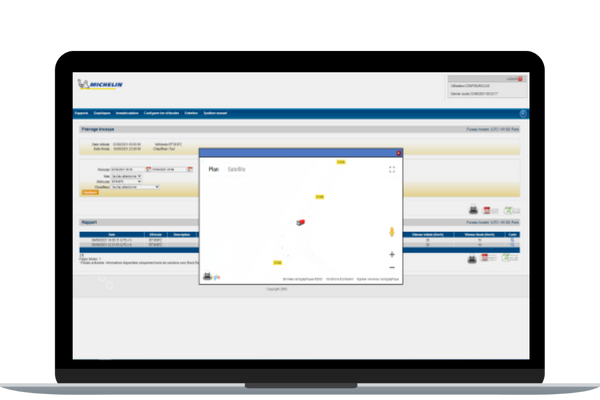
Automated detection notification and recording, triggered by unusual G-force.

2

Secure and automatic upload of the footage of the incident (5 seconds before and 5 seconds after) to the platform

1 (2)

SMS or email alert from the drivers, to then view and download the incident in the platform

After Trips

4

Additional video footage available via our video supplier platform through single sign-on, for claims disputes.

How Camera Video Monitoring Helps The Driver:

Untitled design (4)

1

Driver emergency button in the vehicle cabin, allowing drivers to send an email or SMS notification including their name.

2

Driver-facing AI camera live feedback of potentially hazardous driving situations, feeding directly into driving behaviour analysis:

  • Mobile phone use.
  • Smoking.
  • Distracted driving.
  • Signs of fatigue.
  • Forward collision warning.
  • Headway monitoring.

Camera video monitoring and the Direct Vision Standard (DVS)

Operating in London brings its own requirement: the Direct Vision Standard (DVS), a Transport for London scheme that requires HGVs over 12 tonnes to hold a valid safety permit to operate in most of Greater London. Every eligible vehicle receives a star rating from 0 to 5, set by the manufacturer and based on how much a driver can see directly through the cab windows.

Since 28 October 2024, vehicles rated three stars or above can apply for a permit without needing to demonstrate compliance with the Progressive Safe System. Vehicles rated 0, 1, or 2 stars must fit a Progressive Safe System (PSS), a defined set of safety measures, before they remain eligible. A camera monitoring system is one of seven required components of that system, alongside mirrors, sensors, audible warnings, and external signage.

Operating an eligible HGV in Greater London without a valid permit can result in a penalty charge notice of up to £550, reduced to £275 if paid within 14 days. If the penalty charge isn't paid or challenged within 28 days, it increases to £825.

A dash cam or camera system on its own does not make a vehicle DVS compliant. Compliance depends on the specific technical requirements TfL sets for the Progressive Safe System, and on your vehicle’s existing star rating. If DVS applies to any part of your fleet, it is worth checking your current rating and what a compliant camera setup needs to include before you buy anything. Our fleet compliance guide covers the wider picture of UK fleet regulation.

CAMERA VIDEO MONITORING SOLUTION PACKAGES & SPECIFICATIONS   Pages NEEDS (600 × 400px) (5)

  Single Camera Dual Camera Dual AI Camera Multi Camera
Position of Camera(s) Front-facing Front-facing + Driver-facing
OR
Front-facing + Rear-facing
Front-facing + Driver-facing
Rear-facing (non AI) optional
Front-facing + Driver-facing + Rear-facing
OR
Front-facing + Driver-facing + Sides-facing
VOD Capacity* 24hrs Driver-facing : 34hrs
Rear-facing : 24hrs
48hrs
(32hrs with optional rear-facing camera)
Untitled design (8)-1
Driver emergency button Untitled design (8)-1 Untitled design (8)-1 Untitled design (8)-1 Untitled design (8)-1
Driver Assistant Display
(AI-enabled live feedback)
Untitled design (7) Untitled design (7) Untitled design (8)-1 Untitled design (7)

Drilling


* Recording capacity is an estimation using standard settings and is for guidance purposes only. Actual recording capacity may be affected by factors such as night-time driving.
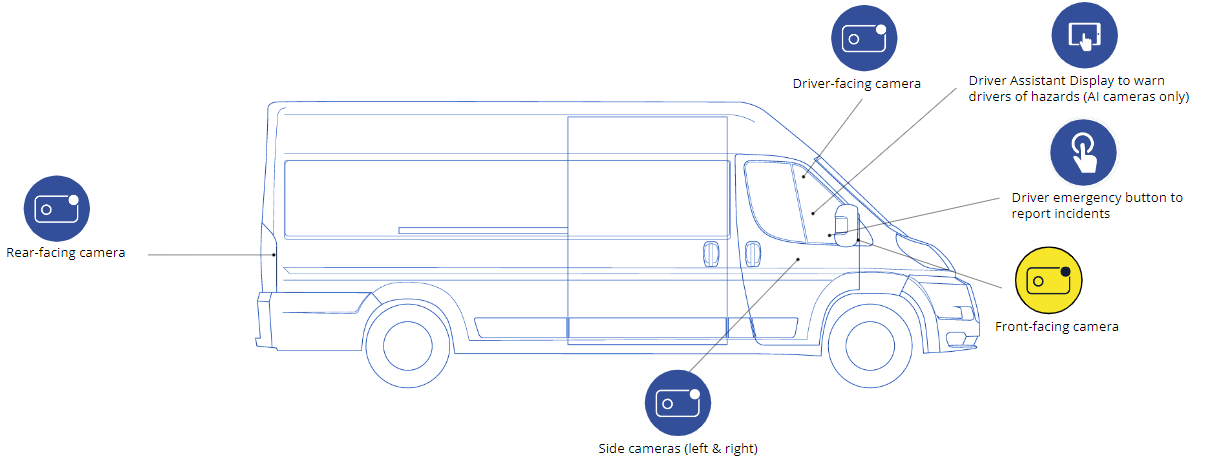
CAMERA VIDEO MONITORING DATA CAPTURE & TECHNOLOGY   Pages NEEDS (600 × 400px) (5)

Cameras LCV-1

CAMERA VIDEO MONITORING SOLUTION PACKAGES & SPECIFICATIONS   Pages NEEDS (600 × 400px) (4)

  Single Camera Multi Camera
Position of Camera(s) Front-facing Front facing + Rear-facing + Sides-facing
Load and driver facing cameras optional
DVR Technology Untitled design (7) Untitled design (8)-1
VOD Capacity* 24hrs 120hrs
with load camera : 100hrs - with load and driver cameras : 80hrs
Live Streaming Untitled design (7) Untitled design (8)-1
Playback Untitled design (7) Untitled design (8)-1
DVS upgrade pack Untitled design (7) add-on
Monitor for live streaming of left camera Untitled design (7) add-on

Drilling


* Recording capacity is an estimation using standard settings and is for guidance purposes only. Actual recording capacity may be affected by factors such as night-time driving.
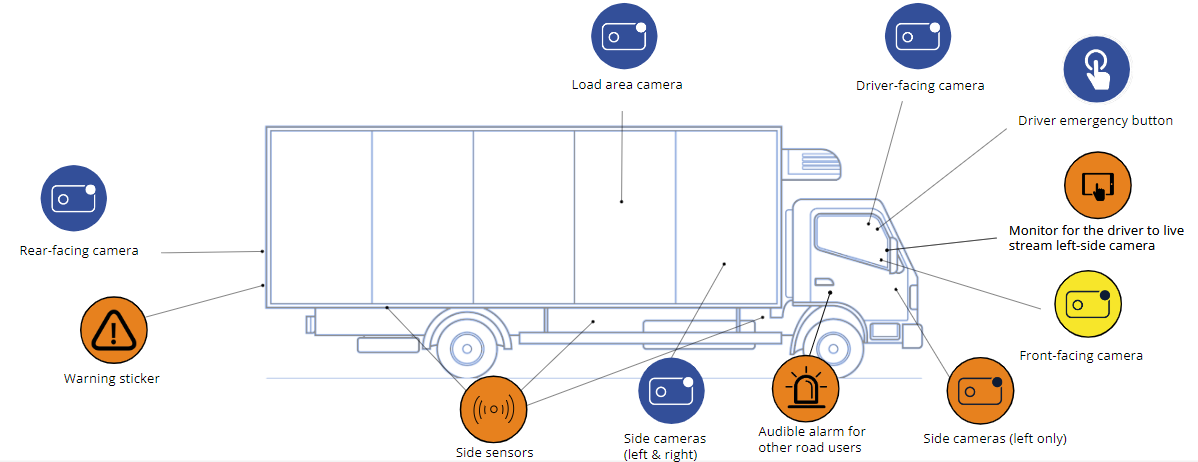

CAMERA VIDEO MONITORING DATA CAPTURE & TECHNOLOGY   Pages NEEDS (600 × 400px) (4)


Cameras HGV

FAQs

Do I need a dash cam to comply with the Direct Vision Standard?

+

Not on its own. DVS compliance for a vehicle rated 0 to 2 stars depends on fitting a full Progressive Safe System, of which a camera monitoring system is one of seven required components, alongside measures like mirrors, sensors, audible warnings, and external signage. Whether a specific camera setup satisfies the technical requirements depends on your vehicle’s star rating and the exact specification TfL sets. Check your rating before assuming any camera system makes you compliant.

What is the difference between a fleet dash cam and a consumer dash cam?

+

A consumer dash cam records to a memory card that someone has to retrieve from the vehicle. A fleet dash cam uploads footage automatically to a central platform, applies rules such as G-force detection, and gives a fleet manager visibility across every vehicle rather than one. Our guide to AI dash cams covers what to look for when comparing systems.

Can a driver-facing camera detect phone use and fatigue?

+

Yes. The driver-facing AI camera on our Dual AI Camera and equivalent packages gives live feedback on mobile phone use, smoking, distracted driving, and signs of fatigue, alongside forward collision and headway warnings. Feedback goes to the driver at the time, and the footage feeds into driver behaviour analysis afterwards.

How is dash cam footage used for claims disputes?

+

Footage from the moments before and after an incident uploads automatically to the platform, and additional footage is available through the video supplier platform for claims disputes. That evidence helps resolve liability questions and supports claims disputes without relying on driver accounts alone.

ALSO SEE HOW WE CAN HELP YOU WITH: 

MCF Icons yellow (12)

COST CONTROL

MCF Icons yellow (2)

COMPLIANCE